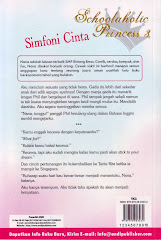
TRILOGI PUTRI SCHOOLAHOLIC

-------------------------------------------------------------------------------------------
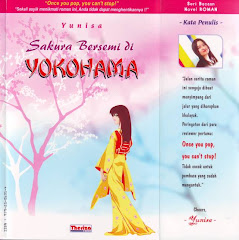
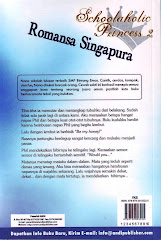
3 novel berisi tips & trik bersekolah di Indonesia & Singapura. Perjalanan kehidupan Putri Schoolaholic yang dikelilingi para pangeran di antara Jakarta, Singapura & Seoul...

Blog ini adalah tempat Yunisa berbagi ide-ide di balik penulisan Schoolaholic Princess termasuk belajar lebih banyak tentang Korea (termasuk jalan-jalan ke Korea)
------------------------------------------------------------------------------------------

Search This Blog - Cari di Blog ini


The Miracle Boys, Romansa Singapura, Simfoni Cinta

Friday, August 14, 2009

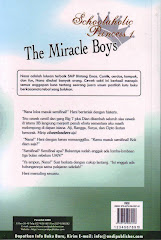
Resensi The Miracle Boys (2)

Paska telah memposting resensinya di Wisata Buku. Thanks, Paska!


Judul : Schoolaholic Princess 1; The Miracle Boys
Penulis : Yunisa KD
Penerbit : Sheila
Tahun : 2008
Genre : Teenlit
Tebal : 182 Halaman
ISBN : 978-979-29-0321-8

Siswi SMP, bintang sekolah, cantik, cerdas, pintar, langganan ikut lomba mewakili sekolah saat SMP, mudah bergaul, bukan kutu buku, tapi kadang agak sedikit jail, itulah serentetan karakter Nana Sutedja. Nana adalah tokoh utama dalam fiksi ini.

Nana bersama dua orang temanya yang kembar, Yosef dan Deni, sering sekali mewakili sekolah untuk mengikuti berbagai lomba atau olimpiade. Tidak tanggung-tanggung, mereka selalu mendapat kedudukan teratas dalam setiap lomba.

Kecerdasan Nana, membuatnya memiliki banyak teman dan tidak sedikit yang akhirnya jatuh cinta pada Nana.

Nana memang pintar tapi kejailannya membuat beberapa guru kurang suka pada Nana. Nana mempunyai kebiasaan mengganti nama-nama guru, misalnya Bu Kinarsih menjadi Bu Kiki, Pak Mujimin menjadi Pak Jimmy, dan sebagainya.

Ada yang unik dalam penokohan fiksi ini. Yunisa KD menggunakan penokohan dan latar karakter ala kerajaan. Tokoh Nana misalnya, dipanggil Putri Nana, tokoh Yosef dipanggil pangeran Yosef, Pak Jimmy dipanggil Raja Jimmy. Sedangkan untuk setting setiap kelasnya menggunakan istilah istana, misalnya untuk kelas 1B disebut istana 1B.

Dengan penokohan dan setting ala kerajaan, fiksi ini menjadi lebih berbeda dengan fiksi lainnya. Banyak juga kejutan-kejutan para tokoh untuk tokoh utama yang menjadikan kisah semakin menarik. Kejutan yang paling menghebohkan adalah ketika teman-teman Putri Nana, mengikutsertakannya dalam pemilihan covergirl, dan ternyata Putri Nana masuk dalam semifinal. Apa yang terjadi dengan Putri Nana selanjutnya? Apakah dia ikut serta dalam semifinal covergirl itu, atau malah menolaknya? Jawabannya bisa disimak di dalam fiksi ini. (Paska)

Resensi The Miracle Boys (1)

Nah, The Miracle Boys juga diresensi oleh orang yang sama di blognya dan dimasukkan ke wisata buku
Book Review: Schoolaholic Princess 1: The Miracle Boys
14 Agustus 2009

the miracle boys (depan)Judul Buku : Schoolaholic Princess 1: The Miracle Boys ~ Penulis : Yunisa KD ~ Penerbit : Sheila (Penerbit Andi) ~ Tahun terbit : Oktober, 2008 ~ Jenis : Teenlith ~ Tebal : 182 halaman ~ ISBN : 978-979-29-0321-8

______________________________________

Siswi SMP, bintang sekolah, cantik, cerdas, pintar, langganan ikut lomba mewakili sekolah saat SMP, mudah bergaul, bukan kutu buku, tapi kadang agak sedikit jail, itu karakter Nana Sutedja. Nana adalah tokoh utama dalam fiksi ini.

Nana bersama dua orang temanya yang kembar, Yosef dan Deni, sering sekali mewakili sekolah untuk mengikuti berbagai lomba atau olimpiade. Tidak tanggung-tanggung, mereka selalu mendapat kedudukan teratas dalam setiap lomba.

Kecerdasan Nana, membuatnya memiliki banyak teman dan tidak sedikit yang akhirnya jatuh cinta pada Nana.

Nana memang pintar tapi kejailannya membuat beberapa guru kurang suka pada Nana. Nana mempunyai kebiasaan mengganti nama-nama guru, misalnya Bu Kinarsih menjadi Bu Kiki, Pak Mujimin menjadi Pak Jimmy, dan sebagainya.

Ada yang unik dalam penokohan fiksi ini. Yunisa KD menggunakan penokohan dan setting ala kerajaan. Tokoh Nana misalnya, dipanggil Putri Nana, tokoh Yosef dipanggil pangeran Yosef, Pak Jimmy dipanggil Raja Jimmy. Sedangkan untuk setting-nya menggunakan istilah setting istana, misalnya untuk kelas 1B disebut istana 1B.

Dengan penokohan dan setting ala kerajaan, fiksi ini menjadi lebih berbeda dengan fiksi lainnya. Banyak juga kejutan-kejutan para tokoh untuk tokoh utama yang menjadikan kisah semakin menarik. Kejutan yang paling menghebohkan adalah ketika teman-teman Putri Nana, mengikutsertakannya dalam pemilihan covergirl, dan ternyata Putri Nana masuk dalam semifinal. Apa yang terjadi dengan Putri Nana? Apakah dia ikut serta dalam semifinal covergirl itu? Atau dia menolaknya? Temukan jawabannya dalam fiksi ini.

Baca juga di wisata-buku

12 Scenic Wonders of Ulsan (2): Daewangam Songnim

Ulsan is a south eastern city that I have not visited... However, this magazine presented a very beautiful review of what to see in Ulsan.
Source: Kozine Magazine, May 2009

Daewangam Songnim
Legend says that Queen Munmu of the Silla became a ‘Guardian Dragon’ of the country after she died and was submerged under the water. With fascinating rock formations, a forest of some 15,000 pine trees, and a vast view of the East Sea, this area is considered the second most magnificent spot on the east coast after Haegeum River.


대왕암 송림
신라 문무대왕비가 죽어서 호국룡이 되어 이 바다에 잠겼다는 전설을 간직한 곳으로 기암괴석과
1만5천여 그루의 아름드리 송림, 동해의 탁트인 푸른 바다 동해안에서 해금강 다음으로 아름답
다는 절경이다. 정문에서 똑바로 들어가면 벚꽃길이 이어지고 등대아래 펼쳐진 기암괴석은 해금
강을 한쪽으로 옮겨다 놓은 듯 그 경관이 절경이다.

Thursday, August 13, 2009

Udah 2nd print lho

Although in most website, including in Penerbit Andi's website, it's not updated yet... Schoolaholic Princess 1-2 udah cetak kedua sejak Maret... Yang Schoolaholic Princess 3, gak tau udah apa belum hehe ^_^ Maklum Yunisa April ke California sebulan kan, jadi lupa nulis ini. Terus pas Juni dibawain adik itu buktinya, baru akhir Juli sempet ngecek dengan mata kepala sendiri di halaman copyright, emang udah cetakan ke-2 LOL.
------
And iseng2, di friendster, banyak juga yang demen sama Schoolaholic Princess ini, dari no 1, 2, 3 (sampe ada yang nulis 1-100) HAHAHA. Terus di multiply ada yang minta sambungan after Nana-PK married...

12 Scenic Wonders of Ulsan (1): Mt Gaji

Ulsan is a south eastern city that I have not visited... However, this magazine presented a very beautiful review of what to see in Ulsan. I will post it one place per day starting today.

Source: Kozine Magazine, May 2009

Four seasons of Mt Gaji

As the tallest mountain in Ulsan (1,240m) and the point where the Taehwa River originates, there is always something new to admire and explore at Mt. Gaji all year round. Standing at the peak, one can see the first sunrise of each day. It was named as one of the ‘100 Most Beautiful Mountains in Korea’ by the Korea Forest Service. Seongnamsa Temple, a training temple for Buddhist nuns, is located here.

가지산 사계
울산광역시 울주군 상북면에 위치하며, 낙동강과 동해를 나누면서 남하하는 “낙동정맥”에서 3번째로 높은 산인 가지산(1,241m)은 영남의 알프스라 불리우는 울산의 산중 최고봉이다. 울 산의 산중 최고봉(1,241m)인 가지산의 주변의 많은 1천m급 산들이 가지산 주위에 펼쳐져 있 어, 특히나 가을이면 주변경관과 어우러져 장관을 이룬다.

Wednesday, August 12, 2009

Dialogue: Form of Expression


How is the taste?
맛이 어때요?
(Ma-si Eot-dae-yo?)

It’s good. (It’s tasty)
좋아요. (맛있어요)
(Jo-ah-yo. (Ma-sshi-seo-yo))


How are you feeling today?
오늘 기분이 어때요?
(O-neul gi-bu-ni eot-dae-yo?)

Not bad (so so)
그저 그래요
(Geu-jeoh Geu-rae-yo.)


How is your health?
요즘 건강이 어때요?
(Yo-jeum Geon-gang-yi eot-daeyo?)

Not really good.
별로 예요
(Byeol-ro Yeh-yo)


How is your life in Singapore (Korea)?
싱가폴(한국) 생활이 어때요?
(Singapore (Han-gook) saeng-hwari eot-dae-yo?)

It’s interesting.
재미있어요.
(Je-mi isso-yo)


How is the weather in Korea?
한국 날씨는 어때요?
(Han-gook nal-ssi neun eot-daeyo?)

It’s bad.
나빠요. (Na-bba-yo)


It’s raining.
비가와요. (Bi-ga wa-yo)

Source: Kozine Magazine, August 2009

Tuesday, August 11, 2009

Dialogue: Asking bus / subway

Which bus are you taking?
몇 번 버스를 타세요?
myeot beon Bus-reul ta-seh yo?

I am going to take bus 77.
77번을 타요.
chil-sip-chil-beon-eul ta-yo.

Do you know how to go to Dongdaemun night market?
동대문 시장에 어떻게 가요?
Dong-dae-mun si-jang-yeh eoh ddeo-keh ga-yo?

You can go there by taking subway line no 4.
지하철 4호선을 타세요.
ji-ha-cheol sa-ho-seon-eul ta-seh-yo.

Source: Kozine Magazine, April 2009

Monday, August 10, 2009

Busan - Insider's Insight

My first encounter of Busan was in my geography project in High School. I remember that Busan is an industrial city, 2nd largest city after Seoul. I did not visit Busan on my Korea trip 2007, but someday... who knows? :D

Soaking up Busan
An insider’s view
By Jade Han (Kozine Magazine, Aug 2009)

Famous for the 2002 Asian Games and its annual film festival, the second capital of Korea is steadily attracting more buzz as the government continues in its campaign to lure tourists and gain exposure. It is also the city I lived for 11 years before coming to Singapore. I would like to walk you through my hometown… Busan.
한국 제 2의 수도 부산. 부산은 2002년 아시안게임과 부산국제영 화제로 유명한 도시이다. 부산은 정부에서 많은 관광객들을 끌어들이므로 점점 국제적인 도시가 되어가고 있다. 또한 내가 싱가폴로오기전에 11년을 살아왔던 도시이기도하다. 나의 고장 부산을 소개하고자 한다.

Create the best memento of Busan
Strictly in the below order:
  1. Sun-bathe at the beach in the day
  2. Indulge in some sashimi for dinner
  3. Play with fireworks at night.

Fast Facts

Population: About 3.6 million
Weather: Temperate with four seasons. Highest temperature is around 32°C in the summer and goes down to an average of 3.8°C during winter.
How to get there: Flights from Incheon to Gimhae (Busan) are available and take about an hour. From Seoul, you can choose to hop on a bus (five to six hours) or jump on the KTX train that will get you to your destination in less than three hours

Down under in Seo Myon
What comes to mind when you think of Busan? Hae Woon Dae? The generosity and warm friendliness of its people? Cha Gal Chi Market? Sashimi? Based on my experience residing in Busan, shopping tops the list. If there is Dongdaemun and Myeongdong in Seoul, there is Seo Myon basement shops and Nampodong in Busan. It only takes about two days to tour the best shopping enclaves here. Once you step off the subway in Seo Myon, you will see the link to Lotte department store and the endless rows of basement shops.

The current Korean male and female fashion trends are displayed in all its glory along this one-kilometre long retail haven – something that never fails to fascinate me each and every time. Why do I love shopping in Busan, you ask? The reason is the cost. You can shop until more than two hands are needed to hold your stash, sip cold, fresh fruit juice, have lunch and dinner at the food streets of Seo Myon with just 50,000 won in your pocket (approximately SGD$50). Try to beat that.

서면 지하상가
부산하면 떠오르는 것이 무엇이 있을까? 해운대? 후한 인심? 자갈치시장? 회?? 부산에 서 11년을 살아 본 경험을 바탕으로 하면, 내가 추천해주고 싶은 것은 쇼핑이다. 그외 에도 많은 것들이 내 기억속에서 몸부림치지만, 한 페이지에 다 쓰기엔 너무나도 모자 르다. 그래서 결정한것은 쇼핑! 서울에 동대문과 명동이 있다면, 부산에는 서면 지하상 가와 남포동이 있다. 딱 이틀이면 부산 쇼핑 명소들을 모두 구경할 수 있다. 서면 지하철 역에서 내리면 바로 그곳에 롯데백화점과 서면 지하상가로 이어지는 곳이다. 부산에 오 래 산 나도 서면 지하상가에 들어설 때마다 이곳이 천국이다 하며 눈이 휘둥그래져 쇼핑 을 시작한다. 고작 1km 남짓하는 지하상가에 남녀 패션 불문하고 한국의 현재 트렌드 를 고스란히 볼 수있다. 내가 부산쇼핑을 사랑하는 진짜 이유는 바로 가격이다. 오만원 만 있으면 양손 가득 쇼핑을 하고도 서면 먹자골목에서 시원한 생과일 쥬스 한 잔에 점 심 저녁까지 다 먹을수 있을정도다

Discovering Nampodong
Nampodong reminds me of Shinjuku in Japan and is somewhere that evokes much childhood memories. It is home to a plethora of vintage and designer boutiques, and many tourists and Koreans gather here to stroll and browse the streets.

Alternatively, you can make a stop at Cha Gal Chi market, which hawks all the seafood you can imagine. Or head to Yong Du San Park if you are feeling shutter-happy. A must-go in my opinion? The B&C bakery. True, Korea is awash with bakeries like Paris Baguette and Crown Bakery, but the B&C bakery is exclusive to Nampodong. Don’t even think of missing the celebrated B&C dessert, Pat Bing Soo (Korean-style ice kachang).


남포동
일본의 신주쿠 거리를 연상케하는 남포동. 많은 관광객들과 한국사람들이 모여 쇼핑 을 하는 곳이다. 그곳엔 빈티지 멀티샵과 보세샵들이 한 곳에 모여있다. 관광객들에게는 쇼핑 장소로도 좋은 장소겠지만 오만가지의 생선들을 팔고있는 자갈치 시장에 사진몇 장 찍을 수 있는 용두산 공원 또한 가볼만한 장소로 추천하고싶다. 내가 꼭 가는 장소 중 하나, B&C 베이커리. 파리 바게뜨나 크라운 베이커리는 전국에 다 있는 곳이지만 B&C는 부산 남포동에만 있는 곳이다. 베이비 부머세대와 같이 성장해온 B&C 베이커리. 그곳에 가면 왠지 어렸을 때의 추억이 떠오른

Kwang Ann Lee beach
Hae Woon Dae may be the poster for Korean summer recollections, but for those who value tranquility like me, Kwang Ann Lee beach is the place. Dwindle your time away in leisure by taking in the night view of Kwang Ann bridge and visiting sashimi restaurants around the Kwang Ann coast.
광안리
여름하면 부산 해운대! 하지만 혼자 있는 것을 좋아하는 나에게는 해운대 해수욕장보다 는 사람이 적은 광안리 해수욕장에서 시간을 보내는 것 또한 추천하고 싶은 부산 코스이 다. 특히 밤에 볼 수 있는 광안대교의 정경. 해변가를 둘러싸고 있는 횟집들. 낮에는 광안리 해수욕장에서 일광욕을, 저녁에는 횟집에 가서 회 한 접시에 해변가로 나와 폭죽놀이를 하는 것도 좋은 추억이 될 것 같다.
Sashimi restaurants

Sunday, August 9, 2009

Diary of daily life in Korean

This is a simple diary... a mundane life... :P

I wake up at 6 am every day
매일 오전 6시에 일어나요.
mae-il o-jeon yeo-seot-si-eh yi-rona-yo.

I have breakfast at 7 am
7시에 아침을 먹어요.
yil-gop-si-eh a-chim-eul meokeoh-yo

I leave my place and go to work at 8 am
8시에 집에서 나와서 회사에 가요.
yeo-deol-si-eh jip-eh-seoh na-waseoh hoi-sa-eh ga-yo

I usually have lunch with my colleagues around 12.
12시쯤에 동료하고 점심을 먹어요.
yol-du-si-zheum-eh dong-ryo-ha-go jeom-sim-eul mok-eoh-yo

I end work at 6 pm
오후 6시에 일이 끝나요.
o-hu yeo-seot-si-eh yi-ri ggeutna-yo.

I am coming back home to have dinner with my family
집에 돌아와서 가족하고 함께 저녁을 먹어요.
ji-beh do-ra-wa-seoh ga-jok-ha-go ham-ggeh jeo-nyeok-eul mok-e

Kozine Magazine, May 2009

Saturday, August 8, 2009

Lettuce dishes (for balancing pork)

My impression on my first tour to Korea is.... PORK is their stapple! I think it must be quite difficult for a Moslem to live there :P Thank God that I am an omnivore, I eat everything!

Korean has a healthy way to eat pork dishes, i.e. by wrapping it in lettuce!
This is the only dish I ate more during my Korea trip in 2007 ... Black pork (Indonesian: celeng, just like in Asterix-Obelix) in Jeju Island is the most delicious cuisine on the tour.

Here is a posting of all pork dishes, with different type of cooking (steamed, BBQ, with kimchi, with rice cake)... Wang Jokbal, Bo ssam, Ssam bap...

wang jok bal = pork with bean sauce
Steamed pork with kimchi (bo ssam)

3-step guide to eat Bo Ssam:
1) Take a leaf of fresh lettuce and put a slice of pork on it.
2) Next, garnish it with the kimchi.
3) Wrap it all up and pop it in your mouth at one go
ssam bap (with rice cake and kimchi)

Ssam Bab - meat (beef, pork or chicken) served with lettuce and rice balls (white or mixed grain).

Jal mogo yo! (Happy eating!)

Friday, August 7, 2009

Dialogue: 취미 (Hobby)


Minsu, what do you like to do?
민수씨는 무엇을 좋아하세요?
Min-su Ssi-neun Mu-eo-sul Jo-a-haseh-yo?

I like to watch a movie.
저는 영화 보기를 좋아해요.
Jeo-neun Yeong-Hwa Bo-gi-reul Jo-a-hae-yo.

Jane, what is your hobby?
제인 씨는 무슨 취미가 있어요?
Jane Ssi-neun Mu-seun Chui-mi-ga Yit-seoh-yo?

I like listening to music and reading a book.
제 취미는 음악 듣기와 책 읽기예요.
Jeh Chui-mi-neun Eum-ahk Deut-giwa Chaek Yil-gi-yeh-yo.

What sports do you like to play?
무슨 운동을 좋아하세요?
Mu-seun Wun-dong-eul Jo-a-haseh-yo?

I like to play tennis.
테니스(골프) 치기를 좋아해요.
Tennis(Golf) Chi-gi-reul Jo-a-hae-yo.

Source: Kozine Magazine, March 2009

Thursday, August 6, 2009

Korean rickshaw

Another my article in old KoKi, Thursday 28 June 2007, previously KoKi was under Kompas newspaper. Translation is in italics.


KoKi Edisi Kamis, 28 Juni 2007

OK deh, ini oleh-oleh saya pas di Korea plesir-plesir sama sohib awal Mei lalu. Edisi pertama di Nami Island. Edisi selanjutnya kalau saya gak males ya...

OK, this is my sharing when I travel to Korea with my best friend in early May. First edition in Nami Island. Next edition - only when I am not lazy...


Ini gambar becak roda 4 ala Korea (turis menggenjot sendiri) -- sayang gak sempat foto pas ada bapak Korea menggenjot penumpang istri dan anak.
This is a 4-wheel rickshaw Korean style (tourist becomes the cyclist himself) -- to bad, I did not take a picture when there was a Korean man cycling the rickshaw with his wife and children.
http://community.kompas.com/index.php?fuseaction=home.detail&id=34460&section=92

Wednesday, August 5, 2009

Ordering drinks in a cafe

Waiter: Welcome!
어서 오세요!
(Eo-soh O-seh-yo)

Jane: Sujung, what would you like to drink?
수정 씨, 뭘 마시고 싶어요?
(Su-jung-ssi, Muol Ma-si-go Sipeoh-yo?)

Sujung: I’ll be having green tea. What about you, Jane?
저는 녹차를 마시고 싶어요. 제인 씨는요?
(Jeo-neun Nok-cha-reul Ma-si-go Si-peoh-yo. Jane ssi-neun yo?)

Jane: I want to have a cup of Café-latte.
저는 카페라떼를 마시겠어요
(Jeo-neun Café-Latte-reul Ma-sigeh-seoh-yo.)

Sujung: Would you like a slice of cake?
케이크 드실래요?
(Cake deu-sil-le-yo?)

Jane: Umm, ok, I will have a slice of cheese cake.
어, 그럼 치즈케이크 한 조각 먹을께요.
(uh, geu-rum cheez cake han jogak meo-geul-ggae-yo).

Sujung: Excuse me! Can I have one cup of green tea and a cup of café-latte?
실례합니다! 녹차하고 카페라떼주세요.
(Shil-reh ham-ni-da! Nok-cha-ha-go Café-Latte-ju-seh-yo.)

Jane: Can you please give us two glasses of water as well?
물도 두잔 주세요.
(Mul-do doo-jan ju-seh-yo.)

Waiter: Certainly. Please wait for a while.
네, 알겠습니다. 잠시만 기다리세요.
(Neh, Al-geh-seum-ni-da. Jahm-siman gi-da-ri-seh-yo.)

Waiter: Excuse me, here you are. Enjoy.
실례합니다. 여기 있습니다. 맛있게 드세요.
(Shil-reh ham-ni-da. Yeo-ki isseumni-da. Ma-shi-kke deu-se-yo.)

Source: Kozine Magazine, July 2009
Photo: Cheesecake Factory, personal collection from San Francisco, April 2009

Tuesday, August 4, 2009

Dialogue: Shopping 2

Ms, how much is this bag?
아주머니, 이 가방 얼마예요?
ju-mo-ni, yi ga-bang eol-ma-yeh-yo?

It’s 25000 won
이만 오천 원이에요.
yi-man o-cheon won-yi-yeh-yo.

I have no cash right now. Can I use a credit card?
지금 현금이 없어요. 카드도 돼요?
ji-geum hyun-geum-yi eop-seoh-yo.CARD-doh doaeh-yo?

Of course, you can use your credit card.
그럼요, 카드도 돼요.
Geu-rum-yo, CARD-doh doaeh-yo.

Source: Kozine Magazine, April 2009

Monday, August 3, 2009

Dialogue: Shopping 1

What do you want to do?
뭐하고 싶어요?
Mo ha-go shi-poh-yo?

I want to go shopping.
쇼핑하고 싶어요.
Sho-ping ha-go shi-poh-yo

What about tomorrow?
내일은 어때요?
Nae-il-eun uh-ttae-yo?

Okay, that’s great.
네, 좋아요.
Nae, jo-ah-yo.

What time shall we meet?
몇시에 만날까요?
Meot-shi-eh man-nal-kka-yo?

Let’s meet at 5pm.
다섯시에 만나요.
da-suh-sshi eh man-na-yo.

Do you have money?
돈 있어요?
Don ee-suh-yo?

I don’t have money.
돈 없어요.
Don op-suh-yo.

Source: Kozine Magazine, June 2009

Sunday, August 2, 2009

Dialogue: Date/Day

What day is today?
오늘이 무슨 요일이에요?
o-neu-ri mu-seon yo-yi-ri-yeh-yo?

It’s Monday.
월요일이에요.
wo-ryo-il-yi-yeh-yo.

What is tomorrow’s date?
내일이 며칠이에요?
nae-yi-ri myio-chi-ri-yeh-yo?

It’s the 16th of November tomorrow.
11월 16일이에요.
sip-yil-wol sip-yuk-yil-yi-yeh-yo.

What are you going to do?
모레 뭐 할 거예요?
mo-reh mo hal geoh-yeh-yo?

I am going to watch a movie with my friends.
친구하고 같이 한국 영화를 볼 거예요.
chin-gu-ha-go ga-chi han-guk yeong-hwa-reul bol geoh-yeh-yo

Source: Kozine Magazine, May 2009

Saturday, August 1, 2009

Bulgogi

Gogi = meat. Perhaps bulgogi is the most famous BBQ meat in Korean cuisine.

Bulgogi literary means fire meat. It is roasted over fire. It is beef, or pork, seasoned with soy sauce and sugar, which gives a mild and sweet taste.
Source: KTO website

Ingredients
600 g beef sirloin
Onions
Scallions
Mushrooms
6 tbs soy sauce
Garlic
3 tbs sugar
1 tbs crushed sesame salt
2 tbs sesame oil
1 tbs ground pepper
1 tbs molasses
1.5 tbs rice wine

Directions:

1. Slice the meat thinly against the grain and marinate them in the rice wine and sugar for 30 minutes
2. Mix the soy sauce with minced garlic, scallions, crushed sesame salt, ground pepper, sesame oil.
3. Pour the soy sauce mixture over the marinated meat. Make sure the soy sauce is mixed evenly with the meat.
4. Place the meat on a frying pan and cook over high heat.
5. When the meat is almost fully cooked, add the sliced onions and mushrooms. Cook until the meat is well done.
Bulgogi
Bahan:
600 g daging sapi sirloin, iris tipis
1 buah bawang Bombay, iris tipis
3-5 jamur shitake atau champignon, iris tipis

Saus:
1 sdm daun bawang iris halus
6 sdm kecap/soy sauce
1/2 cup bawang Bombay parut
3 siung bawang putih, cincang halus
3 sdt gula pasir
1/2 sdt jahe parut
2 sdt minyak wijen
1/4 sdt merica hitam bubuk
1,5 sdm rice wine
1 sdt biji wijen

Sambal Tradisional Korea (ssamjang)
Bahan:
3 sdm tauco Korea (dwenjang)
1 sdm sambal cabai merah Korea (kochujang)
1 sdt gula pasir 2 sdt bawang putih cincang
2 sdt minyak wijen

Cara membuat:
•Taruh irisan daging dan bawang Bombay dalam mangkuk.
•Aduk semua bahan saus hingga rata.
•Rendam daging dengan Saus selama minimal 3 jam (makin lama direndam akan makin enak rasanya).
•Panggang di atas bara api, atau masak di dalam wajan hingga daging matang kedua sisinya. Angkat.
•Taburi biji wijen, sajikan dengan nasi dan sajian pendamping dan sambal.
Untuk 5 porsi
Resep: Detik (dev)
---------------
I found this recipe in Femina online (Indonesian women magazine)Bahan:
600 g daging sapi bagian has dalam, iris tipis (600 g beef, slice thinly)

Saus perendam, aduk rata (mix well for sauce)
6 sdm mirin / 6 tbs mirin
2 sdm air jahe / 2 tbs ginger water
1 sdt merica bubuk / 1 tsp pepper powder
75 ml air / 75 cc water
4 sdm minyak wijen / 4 tbs sesame oil
5 batang daun bawang, iris tipis / 5 stalks of leeks, slice thinly
1 1/2 sdt cabe bubuk / 1 1/2 tbs chilly powder
75 g biji wijen, sangrai, tumbuk kasar / 75 g sesame seed, fry without oil, crushed

Pelengkap: Nasi panas (hot steamed rice) & kimchi

Cara membuat (Direction)
Campur saus perendam dengan daging, diamkan 2 jam, sisihkan
(Marinate the sauce with the beef for 2 hours, set aside)
Panggang di atas hotplate hingga matang, angkat. Sajikan bersama nasi & kimchi.
(BBQ on hotplate, ready to serve with hot steamed rice & kimchi).

Friday, July 31, 2009

Random Dialogue

My favourite actor is Oh Ji Ho.
제가 제일 좋아하는 배우는 오지호에요.
Je-ga je-il jo-ah-ha-neun bae-wooneun Oh-Ji-Ho ee-eh-yo.

What do you want to do?
뭐하고 싶어요?
Mo ha-go shi-poh-yo?

I am going to school soon.
잠시 후 학교에 갈거예요.
Jam-shi-hoo hak-gyo-eh gal-guhye-yo.

I am going to the market to buy vegetables.
야채를 사러 시장에가요.
Ya-chae-reul sa-ruh shi-jang-eh ka-yo.

I am exercising in the park.
공원에서 운동하고 있어요.
Gong-won eh-suh oon-dong-ha-go ee-suh-yo.

Source: Kozine Magazine, June 2009

Thursday, July 30, 2009

Korean traditional house and Winter Sonata famous spot

OK, this is my first article published in KoKi Tuesday, 26 June 2007.
Rumah Adat Korea
KoKi edisi Selasa, 26 Juni 2007

OK deh, ini oleh-oleh saya pas di Korea plesir-plesir sama sohib awal Mei lalu. Edisi pertama di Nami Island. Edisi selanjutnya kalau saya gak males ya...
Pulau Nami itu tempat syuting standar -- banyak turis domestik dan mancanegara. Ke sana harus naik feri buat nyebrang.
Nami Island is a standard shooting place -- a lot of domestic and foreign tourists. We have to take ferry to cross the sea.

Ini gambar rumah adat Korea yang standar (yang di Pulau Jeju jelek deh soalnya ada atap penahan badai). Korea cuma ada satu suku, yakni Han. Jadi secara budaya, kalah jauh dari Indonesia.

This is a picture of a standard Korean house (in Jeju Island is quite ugly because they have storm-resistant roof). In Korea, there is only one ethnicity, i.e. Han. Culturewise, they are far less diverse than Indonesia.

Ini gambar jalan terkenal pas syutingan Winter Sonata -- saya gak nonton, jadi gak ngeh. "You must see it so you can appreciate", kata sobib saya yg traveling bareng. Lorong ini berganti musim, berganti warna. Saya pergi musim semi.

This is the famous road for Winter Sonata -- I did not watch it, so I did not understand the sentimental value. "You must see it so you can appreciate", said my best friend who travelled with me. This venue is changing color by season change. I went there on spring.

Wednesday, July 29, 2009

Dialogue: Office

Which floor is your office at?
사무실이 몇 층에 있어요?
sa-mu-sil-yi myeot cheung-eh yitseoh- yo?

My office is on Level 3.
3 층에 있어요
sam-cheung-eh yit-seoh-yo.

What is your phone no?
전화 번호가 몇 번이에요?
jeon-hwa beon-ho-ga myeot beonyi-yeh-yo?

My phone no. is 9876 – 5432
9876 - 5432예요. 구 팔 칠 륙에 오 사 삼 이예요.
gu-pal-chil-lyuk-eh o-sa-sam-yiyeh-yo.

Source: Kozine Magazine, April 2009

Tuesday, July 28, 2009

Dialogue: 생일 축하하기 (Birthday)

Minsu, do you have time for me tomorrow?
민수씨, 내일 시간 있어요?
Min-su Ssi, Nae-yil Si-gan Yitseoh-yo?

Yes, I do, why?
네, 시간 있어요. 왜요?
Neh, Si-gan Yit-seoh-yo. Wae-yo?

Please come to my house. Tomorrow is my birthday.
우리 집에 오세요. 내일이 제 생일이에요.
Wu-ri Jip-eh O-seh-yo. Nae-yil-yi Jeh Saeng-il-yi-yeh-yo.

Oh, really? Happy Birthday.
그래요? 축하합니다.
Geu-rae-yo? Chu-ka-ham-ni-da.

Source: Kozine Magazine, March 2009

Monday, July 27, 2009

Teddy Bear Museum, Jeju, Korea

Here is the archive of my articles about Korea trip in KoKi (previously under Kompas newspaper), in Indonesian. Translation in italics.
Anyway, KoKi edisi Senin, 2 Juli 2007
Monday, 2 July 2007


Boneka Teddy termahal di dunia (karena pakai Louis Vuitton)

The most expensive Teddy bear in the world (because she is wearing Louis Vuitton)

Penduduk Korea zaman dahulu kala dari Tiongkok, sama seperti orang Jepang dan bahkan orang Indonesia. Tapi sekarang, orang Korea tidak mau dihubungkan dengan orang Cina, orang Korea itu ya orang Korea. Korean Chinese sendiri cuma 20 ribu orang total di Korsel. "Han" sendiri juga dipakai sebagai nama sungai (di Seoul, Sungai Han membelah kota).

Korean people came from China long time ago, just like Japanese and even Indonesian. But now, Korean is no longer linked to Chinese. Korean is Korean. Chinese Korean in total is only about 20,000 people in whole South Korea. "Han" is also used to name the river (in Seoul, Han River is dividing across the city)

Ini oleh-oleh dari Pulau Jeju, Teddy Bear Museum (katanya buat syuting Princess Hours, tapi saya tidak nonton juga hehehe). Museumnya ada 3 lantai. Kita masuk itu dari atas, terus makin turun. Lantai paling bawah buat jualan suvenir... Pulau Jeju katanya terkenal dengan hasil jeruk mini (yang makannya harus sekulitnya). Musimnya cuma setahun sekali, April -- saya kebagian dikit. Tapi rasanya tidak terlalu enak (menurut saya lho).

This is what I share from Jeju Island, Teddy Bear Museum (they said it was used to shoot Princess Hours, but I didn't watch it hehe). The museum is 3-storey building. We enter from the highest floor, and go down. The basement is used for souvenir shop. Jeju Island is famous with her mini oranges (you have to eat with the skin). Once a year only, in April -- I tasted a bit. But I didn't really like the flavor (IMO).

Boneka Teddy terkecil di dunia (pakai lup)
The smallest Teddy bear in the world (using magnifying glass)

Karena dikotaki kaca, ya fotografer amatir masih ada pantulan-pantulan.
All are boxed up in glasses, as amateur photographer, there were reflections.

Sunday, July 26, 2009

Asking Questions in Korean


What is this? / What is that?
이게 뭐예요? / 저게 뭐예요?(Yi geh muo ye yo? / Juh geh muo ye yo?)

This is an apple. / That is a banana.
이건 사과예요. / 저건 바나나예요.(Yi gon sa gua ye yo. / Juh gon Banana ye yo.)

What’s your name?
이름이 뭐예요?(Yi rum yi muo ye yo?)

My name is Kim Min Su./ I am Kim Min Su
김 민수라고 합니다. / 김 민수입니다.(Kim min su ra go hahm ni da. / Kim min su yim ni da.)

Where are you from?
어디에서 왔어요?(Oh di eh suh wa ssuh yo?)

I’m from Singapore.
싱가폴에서 왔어요.(Singapore eh suh wa ssuh yo.)

How old are you?
나이가 어떻게 되세요?(Na ee ga eo ddeo ke dwae se yo?)

I’m twenty years old.
스물입니다.(Seu mul im nida.)

Where do you live?
어디에 사세요?(Eo di eh sa se yo?)

I live at joong-gu in Seoul.
서울시 중구에 삽니다.(Seoul si joong-gu eh sam ni da.)

Source: Kozine Magazine, February 2009

Saturday, July 25, 2009

인사 (Greetings)


Perhaps what we all know is only Annyeong Haseyo and Thank you, i.e. 감사합니다 (gam sa ham ni da) or "gomab sumnida"

Here is a list of additional greetings in Korean.
Your welcome! /Don’t mention it!
아니에요. (a ni yeh yo)

It’s Ok

괜찮아요.(goaen cha nah yo)

I am sorry.
미안합니다. (mi an ham ni da).

Good night! / Sweet dreams!
Adult & Elderly
안녕히 주무세요. (an nyeong hi ju mu seh yo)
The answer is the same.

Friends & Kids
잘 자.(jal ja)
The answer is 너도 잘 자 (neo do jal ja)

Nice to meet you.
만나서 반갑습니다. (man na seo ban gap seum ni da)

Nice to meet you, too.
네, 반갑습니다. (ne, ban gap seum ni da)

Have a nice weekend.
주말 잘 보내세요. (ju mal jal bo nae seh yo)

Thanks, have a nice weekend, too.
네, 주말 잘 보내세요. (ne, ju mal jal bo ne seh yo)

Source: Kozine Magazine, January 2009

Friday, July 24, 2009

Idea behind Viol-in-Love (Book 3)

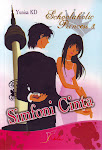
Book 3: Simfoni Cinta (Love Symphony)
In chapter "Viol-in-Love", I tell you that Sonny, another suitor of Nana, i.e. her lifelong friend (since kindergarten) actually plays violin. He and Nana went to the same music course together. When they were small, Nana fared better in her piano. However, when they grew up, Sonny was proven a prodigy - a talent late in blooming.

I compare Sonny with Sarah Chang, the famous child violin prodigy from Korea. Here is one interview article with her from Kozine Magazine, January 2009 (by Lydia Soh)
----------
Born to a violinist father and composer mother, it is no surprise that Sarah Chang is remarkably musically – inclined. Such a whiz is the young Korean – American lady with the violin that she auditioned for the prestigious Julliard School at the tender age of six. And the extraordinarily gifted classical musician has since collaborated with famed orchestras and conductors worldwide, wielding her bow at Carnegie Hall and the Kennedy Center in Washington D.C… just to name a few. But there is more to Sarah Chang than just rare, incredible talent, as KOZINE discovers.

What would you be if you were not a professional violinist?
I can’t imagine doing anything else, since I’ve devoted so much of my life to the violin. I do love the music industry though, and would have loved to be involved in some aspect of the music business. Be it the recording industry or dealing with concert promotion etc.
Do you have any favourite pieces of music?
I love anything and everything Brahms wrote.Shostakovich and Sibelius are also my favourites.

Any pre-concert rituals?
Not really! I give too many concerts a year to be locked down into any sort of ritual. I do try to get plenty of rest before a concert; I almost always take a nap and have my own personal quiet time before a concert.

Some classical musicians have chosen to go down the commercial or pop route. Would you ever consider doing that?
No. I don’t feel that it is necessary. I have a wonderful, loyal fan base and I love the work that I do and the music that I have devoted myself to. Some people are better suited for the crossover/pop route but I’m not one of them. I like the integrity and the honesty of the classical music world. You can dress things up or fluff it up in other fields. But with classical music, it truly does come down to whether or not you can deliver on-stage and whether you play well every performance.

I realise that I’m young, and I love fashion, clothes and going out with friends. But that’s the personal part of my life. When it comes to being onstage I like to keep things pretty straightforward. I have done commercials and advertisements for Movado watches and jewellery, I’ve also done advertisements for music/string companies. And I recently did a TV commercial for IBK Bank in Korea. I do make sure though that the companies and names I’m associated with are of the highest quality and only select projects that mean something to me.

Did you know?
• She is currently playing a 1717 Guarneri del Gesu violin
• Yale University dedicated a chair at Sprague Hall in her name in 2005
• She speaks three languages - English, Korean and German

알고 있었나요?
• 장영주는 현재 1717년Guarneri del Gesu 바이올린을 켜고있으며
• 예일대학교에서 그녀의 이름으로 Sprague Hall에 의자를 기부했다.
• 장영주는 영어, 한국어, 독일어 3개국어를 구사한다.

Your most memorable or unforgettable performance to date.
Too many to count! All my debuts were pretty special - my Carnegie Hall debut, my Berlin Philharmonic debut, etc. I played in Pyong Yang several years ago, that was an eye-opening experience for me. I have also played at the Olympic Stadium in Korea and also the World Cup Stadium, all those outdoor events were pretty spectacular.

Tell us something about yourself that people would not normally expect of or associate with you.
That I love to have fun, love to dance and can’t drink to save my life. And I’m also hopeless in the kitchen.

Thursday, July 23, 2009

Cold Kimchi Noodle

By Chef Park
As Singapore’s weather is hot, he recommends cold kimchi noodle.

Ingredients: (for 4 people)
• 200 g well fermented kimchi
• ½ tbsp kimchi seasoning (sesame oil, sesame, sugar)
• 2 cups kimchi gravy soup
• 3 cups frozen anchovy broth
• 250 g soft noodle (so myun)
• 1 cucumber
• 2 tbsp vinegar
• salt and white pepper for taste.

  1. Take out the stuffing from the kimchi and squeeze out the excess gravy and cut it in small cubes. Mix it well with the kimchi seasoning by hand.
  2. Drain the kimchi gravy soup through the drainer. Mix the pure soup with the defrosted anchovy broth. Then put a bit of vinegar and pepper for taste.
  3. Boil the noodle and drain the water. Put the noodle in a bowl and put the prepared kimchi and chopped cucumber on top of the noodle. Pour the cold mixed kimchi soup and anchovy gravy.

한상 쉐프 박정우씨가 알려준 간단 레시피
싱가폴은 일년 내내 더우니까 시원한 김치말이 냉국수를 소개합니다.
재료: (4인기준) 잘익은 김치 200g, 김치양념(참기름, 깨소금, 설탕1/2t), 김치국물 2컵, 멸치육수 얼린것 3컵, 소면 250g, 오이 1개, 식초2T, 소금, 흰후추가루 약간씩

-잘 익은 김치는 소를 떨고 국물을 꼭 짜서 송송 썰어 김치양념을 넣어 조물조물 무친다.
-김치 국물을 체에 받쳐 맑은 국물만 사용하고 얼린 멸치 육수를 해동시켜 섞은 다음, 식초 소금 흰후추가루로맛을 내어 준비한다.
-소면을 삶아 물기를 뺀 다음 그릇에 소면을 적당히 담고 김치 무친것과 오이채를 차례로 올리고 차게 만든김치 국물을 붓는다.

Source: Kozine Magazine, April 2009

Wednesday, July 22, 2009

Spicy Soft Tofu Stew

Spicy Soft Tofu Stew
순두부 찌개


Soondooboo Chigae is a spicy stew made with soondooboo (soft tofu). There are multiple variations of this dish that consists of seafood, beef, pork and/or vegetable. There are popular restaurants that specialise in only soondooboo chigae in Korea. The most common soondooboo chigae is usually made with some added pieces of pork, several small clams, chopped garlic, and chilli powder along with chopped leeks and sesame oil.
The ingredients and spicy broth are added to a generous amount of soondooboo in a ttukbaegi (stone bowl) and boiled over intense heat. A raw egg may be included to add flavour as well as thickness, which can dilute the spiciness of the broth.

Source: Prime Magazine, May-June 2010
Click to enlarge

Recipe Ingredients
• 1 pack of soondooboo (soft tofu)
• 8 small clams – cleaned
• 4 oz pork (or beef) - sliced
• 1/4 cup kimchi - roughly chopped
• 1 red hot chili - sliced
• 2 green hot chilies - sliced, 2 green onions - sliced
• 1 egg
• 1 tbsp kochukaru (Korean chili powder)
• 1 tbsp vegetable oil
• 1 tsp minced garlic
• 1/2 tsp juice of ginger
• 1 tsp soy sauce
• 1/2 tsp sesame oil
• 3 cups water

Directions
1. Marinate pork with ginger juice, soy sauce, sesame oil and minced garlic.
2. In a pot, add vegetable oil and saute pork.
3. Add kochukaru and keep stir.
4. Add water and kimchi, bring to a boil.
5. Put in soondooboo with a spoon.
6. Reduce heat, add chilies, green onions and clams. Cook for a minute or so.
7. Place the raw egg in the centre and a dash of sesame oil.
8. Serve with rice.
Source: Kozine Magazine July 2009

Tuesday, July 21, 2009

Kimchi Fried Rice

K.O.R.E.A. Keep Optimistic Regardless of Every Adversity

Fried rice seems to be associated with any Asian countries, including Korea. Here is a recipe from Kozine magazine (July 2009).

Kimchi Fried Rice
김치볶음밥

Kimchi Bokeum Bop (Kimchi Fried Rice) is a simple but tasty dish for Kimchi lovers.
At home, we usually use well fermented (or riped) kimchi for the fried rice or kimchi chigae (soup), as it is a bit too sourish to eat on its own.
There is no standard recipe or cooking procedure for this particular dish, as you can add anything you have in your fridge. You can add other vegetables such as onion, spring onion and garlic. And you can also choose to add luncheon meat, egg, tofu, beef and so on. It’s just like any other fried rice, but of course the essence of the dish is the kimchi and its gravy.
Below is one recipe. But as mentioned, you can always replace the meat with luncheon meat.

Recipe Ingredients
(2 Servings)
• 2 cup of cooked rice
• 1/2 cup of kimchi with liquid
(pickled fermented vegetables)
• 50g of minced pork or ground beef
• 1 tbsp soy sauce
• 1/4 onion
• 1 egg
• 1 clove of garlic
• 2 roots of green onion
• Vegetable or olive oil
• Salt,pepper,sugar

Directions
  1. Cook rice.

  2. Chop kimchi into small pieces. Save kimchi gravy (liquid) to add to rice, if desired.

  3. Dice and mince green onions, onions, and garlic.

  4. Season the minced pork or beef with soy sauce, minced garlic and powdered pepper.

  5. Saute the pork (or other substitutes) with vegetable or olive oil in frying pan.

  6. When the pork is cooked, add chopped onions, kimchi and cook for 5 minutes.

  7. Add minced garlic and green onion. Cook a little more and turn off the heat.

  8. Add cooked rice and mix all ingredients well.

  9. Add 1-2 tbsp of sesame oil and re-heat again.

  10. Add salt, pepper and sugar to meet taste.

  11. Cook egg sunny side up (or scrambled).

  12. Put rice on a dish and place a fried egg sunny side up on top.

Monday, July 20, 2009

Sino Korean number

The second numeric system is Sino-Korean. It is used for value or phone number, account number, money, exam score, hotel room, etc.
0 = gong
1 = il ("eel" in English)
2 = i ("e" in English)
3 = sam ("some" in English)
4 = sa
5 = o
6 = yuk
7 = chil ("chill" in English)
8 = pal
9 = gu
10 = sip
...
11 = sip il
12 = sip i...
....
20 = i sip
21 = i sip il...
...
30 = sam sip
40 = sa sip...

100 = baek
1,000 = cheon
10,000 = man
100,000 = sip man
1,000,000 = baek man
10,000,000 = cheon man

1,123 = 'cheon baek i sip sam' --> omit the "eel"
15,000 = 'man o cheon'
100,590 = 'sip man o baek gu sip'
Credit: David Sentanu

Sunday, July 19, 2009

Survival Korean: Countable Number

When you take a picture, you say "hana, dul, set!"
OK let's start counting in Korean. They have complicated numeric system. The first one is for countable things, e.g. age, number of persons, number of fruits...

1 = hana
2 = dul
3 = saet
4 = naet
5 = daseot
6 = yeoseot
7 = ilgop
8 = yeodorp
9 = ahop
10 = yeol

11 = yeol hana
12 = yeol dul
...

20 = seumul
21 = seumul hana
22 = seumul dul
...
30 = seoreun
40 = maheun
50 = suin
60 = yesun
70 = ilheun
80 = yeodeun
90 = aheun
100 = baek

credit: David Sentanu

Saturday, July 18, 2009

PK's birthday bouquet

Dear readers and future director of Schoolaholic movie / TV series

Today I will write about PK's birthday. It is 14 March, the same as Albert Einstein's birthday. I purposely chose this date because this is also my lil sis' birthday (the one who looks like Rain - the Korean star).

If you read Book 3 Simfoni Cinta, you recall that Nana was down with sore throat, so she went to a doctor to get an MC (medical certificate). Then, she went to PK's apartment to hand-deliver his birthday present ^.^ and Phil's manager (Manager Bae) was stunned when he looked at what she brought for a birthday present!

Here is what I have in mind when Nana created a chocolate bouquet for her boyfriend Phil.

Well, actually I was highly inspired by Ferrero Rocher TV ad when the bride had a chocolate bouquet instead of a normal flower bouquet - and she was sad when she had to throw away the bouquet... It was one of my all-time favorite advertisements.


Source: various gift shops

Miyeokguk 미역국 (Seaweed Soup)

On PK's birthday, his manager ordered a traditional Korean dish for his birthday - Seaweed Soup. Phil said to Nana that the soup is good for her sore throat ^.^ (Book 3 Simfoni Cinta).

Here is recipe of what they eat for lunch: Seaweed Soup (Miyeok Guk)
Korean-style Seaweed Soup
recipe image
Rated:rating
Submitted By: Eunah Lee
Photo By: Christopher
Prep Time: 15 Minutes
Cook Time: 30 Minutes
Ready In: 45 Minutes
Servings: 4
"This is the recipe of Korean-style seaweed soup. It's a traditional birthday dish in Korea. Also, every women who gives a birth eats this soup because it is believed that seaweed soup helps with breast feeding."
INGREDIENTS:
1 (1 ounce) package dried brown seaweed
1/4 pound beef top sirloin, minced
2 teaspoons sesame oil
1 1/2 tablespoons soy sauce
1 teaspoon salt, or to taste
6 cups water
1 teaspoon minced garlic
DIRECTIONS:
1.Soak seaweed in water to cover. When soft, drain, and cut into 2 inch pieces.
2.Heat a saucepan over medium heat; add beef, sesame oil, 1/2 tablespoon soy sauce, and a little salt, and cook for 1 minute. Stir in seaweed and remaining 1 tablespoon soy sauce; cook for 1 minute, stirring frequently. Pour in 2 cups water, and bring to a boil. Stir in garlic and remaining 4 cups water. Bring to a boil, cover, and reduce heat. Simmer for 20 minutes. Season to taste with salt.